
Remote-controlled cars: Everything you need to know!
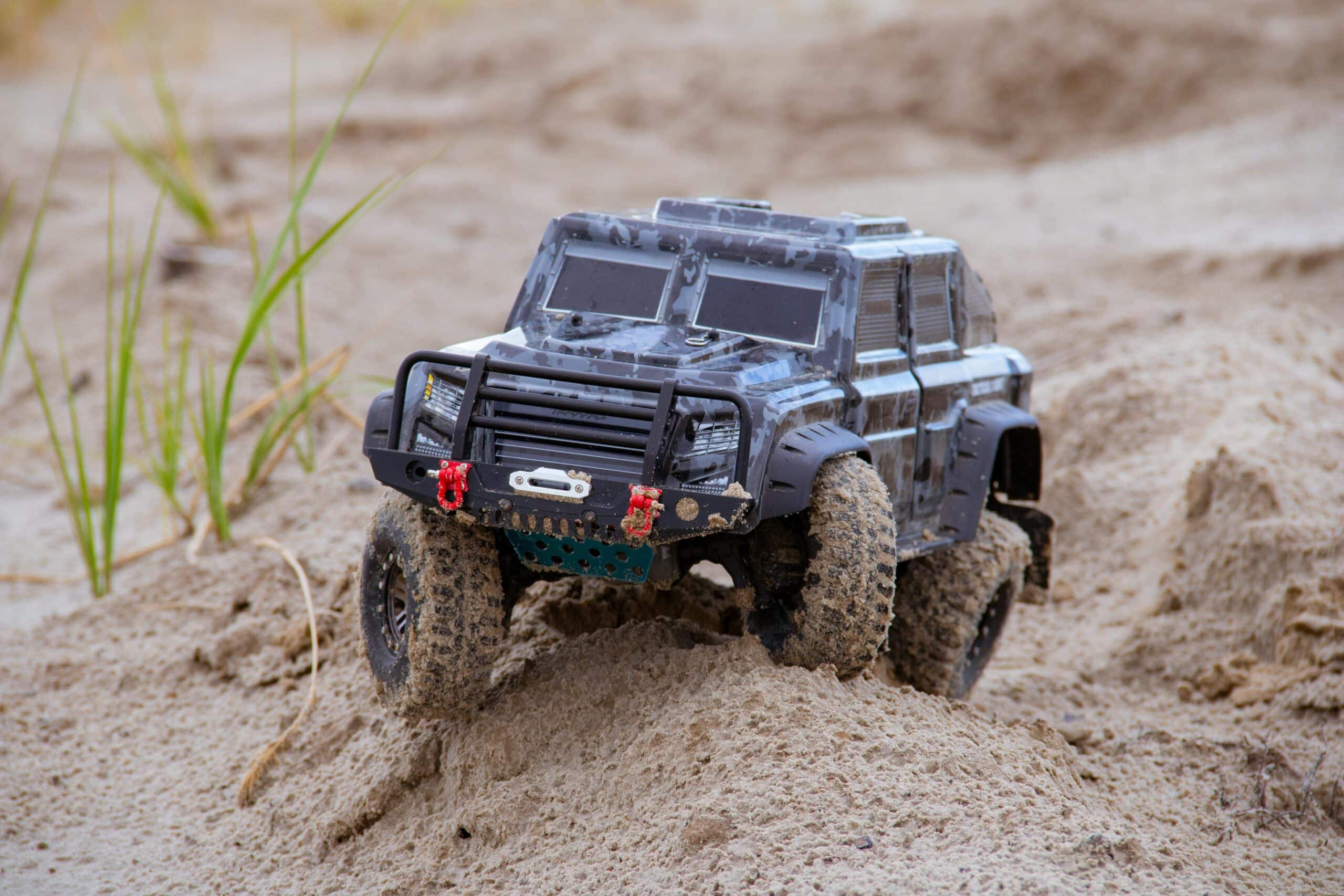
Photo by Ilya on Pexels.com
From what age are remote-controlled cars suitable?
Remote-controlled cars come in many varieties, from very simple models for small children to sophisticated RC cars for teenagers. Different models are suitable depending on your child's age and stage of development. Below we have listed the most important age groups and provide information on suitable models and learning goals.
Toddlers (1 to 3 years)
Classic remote-controlled cars in the technical sense are not really suitable for children aged one to three years. Instead, push toys or simple toy cars that do not have a real remote control but are equipped with large, colorful buttons or handles are suitable. These models are designed to be robust and unbreakable. Large plastic wheels allow the vehicle to glide over carpets or uneven surfaces. The speed is very low and limited to a pure push function or simple "drive forward" commands. This allows little ones to learn how to handle spatial orientation and develop their first motor skills without being overwhelmed by complicated electronics.
Preschool children (3 to 5 years)
At preschool age, children are curious to control and influence things. Simple remote-controlled cars with large buttons and slow speeds are now an option. These models typically work with AA or AAA batteries. The remote control only has a few buttons and usually offers forward, reverse, right and left functions. The speed is around two to three kilometers per hour so that the child can still stop the vehicle manually if necessary. Robust plastic bodies protect the interior in case the car tips over or hits an object. The controls promote hand-eye coordination and are fun even for the youngest children as they steer the car unerringly across the ground.
Primary school children (5 to 8 years)
Children of primary school age are in many ways ready for more complex tasks. Remote-controlled cars for this age range usually have rechargeable batteries or more powerful batteries and reach speeds of five to eight kilometers per hour. The remote control is usually a two-channel remote control, which can offer a "turbo" or "sport" button in addition to directional control. The housing remains stable and impact-resistant, often combining plastic with metal reinforcements. At this age, children learn to charge batteries, to open and close battery compartments if necessary and to understand the difference between the various functions of the remote control. The models are designed to withstand falls from small stairs or furniture relatively unscathed. Another important aspect is the awareness of energy management: children learn that a car can only drive for a certain amount of time and must be recharged beforehand. This teaches planning skills and a sense of responsibility.
Older children and teenagers (8 to 15 years)
From around the age of eight, many children start to take a greater interest in technical details. Models with higher speeds of ten to twenty kilometers per hour or more are suitable here. The remote control can already control more than two channels, for example separate throttle and steering levers, trim functions or light and sound effects. Four-wheel drive and shock absorbers are also among the features that are fun for this age group. Many youngsters now want to tinker with their vehicle themselves, change tires or adjust the suspension. This means that the remote-controlled car is not just a toy, but an introduction to the hobby of RC model making. High-end models with brushless motors and LiPo batteries are ideal for this age group, as they offer significantly more power and longer driving times. Teenagers can then race or take part in competitions in gyms or special RC facilities. At this age, it is also important that the child learns to maintain their vehicle properly, recognize wearing parts and replace them in good time.
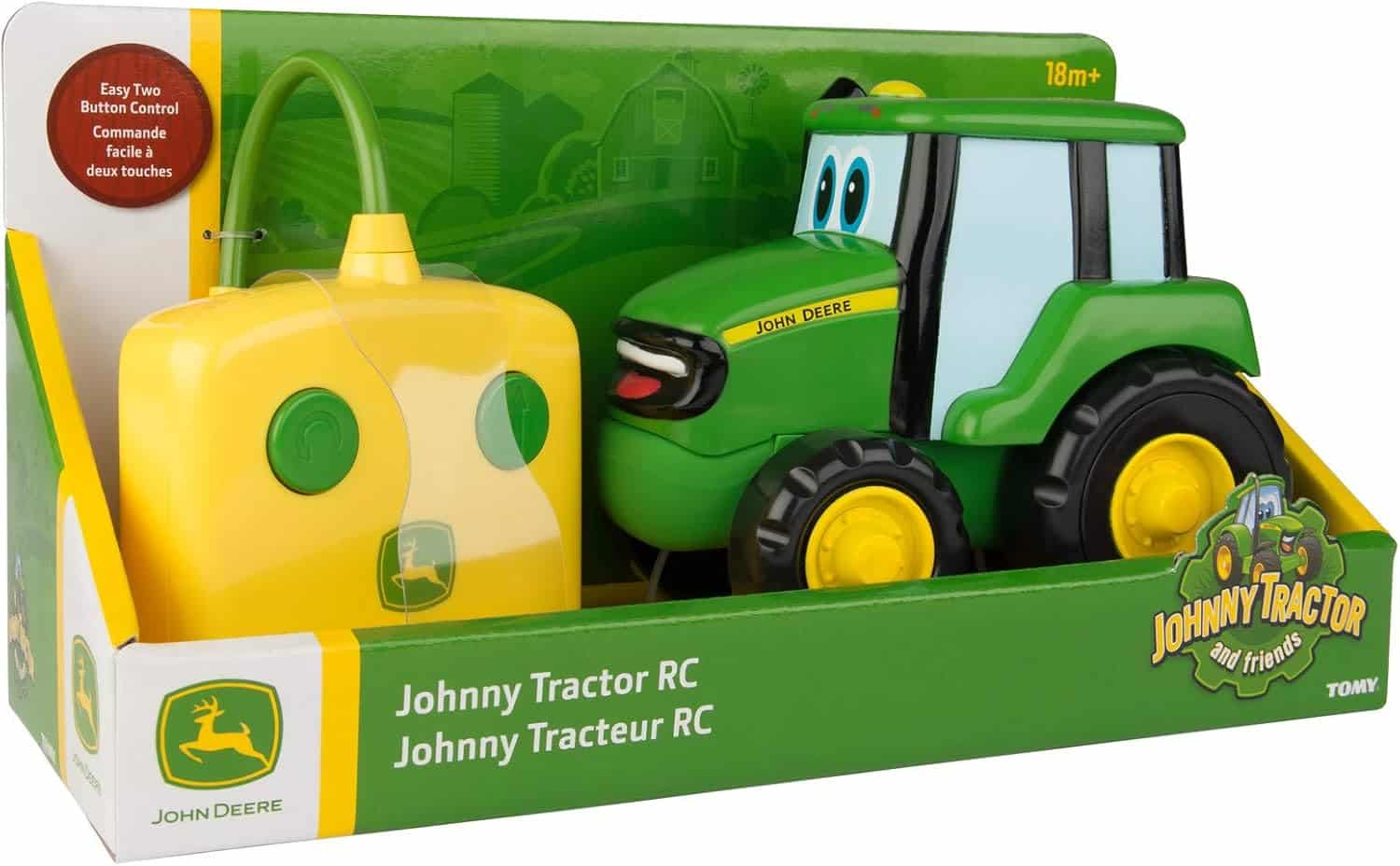
Photo by TOMY / John Deere
What are remote-controlled cars good for?
Remote-controlled cars are not just toys. They contribute to your child's development in many ways. Below we explain the most important benefits from an educational, motor and social perspective.
Promotion of motor skills
Children learn to coordinate their hands and eyes by controlling a remote-controlled car. When they have to navigate forwards, backwards or around obstacles, they refine their fine motor skills. Even pressing the remote control buttons requires precise movements. This helps, for example, when learning to write and other activities that require fine motor skills. Even small children who only press simple buttons benefit because they understand the relationship between their movement and the vehicle's reaction. As they get older, the requirements become more demanding and the children simultaneously practice maneuvering the car calmly over obstacles.
Cognitive development and problem solving
A remote-controlled car makes children curious about technology and awakens their understanding of cause and effect. They learn that pressing the "forward" button causes the car to roll and that they have to let go of the remote control to stop it. Later, they create obstacle courses and calculate distances and speeds. If the car gets stuck in the sand or tips over on a ramp, they think about how they can solve the problem. This process trains spatial imagination, planning skills and logical thinking. The older the child is, the more complex the tinkering and tinkering tasks around the car become. Children also learn that they can look for a solution to technical problems or defects, be it a loose cable, a flat battery or damaged parts.
Social interaction and team spirit
Especially when several children are out and about with their remote-controlled cars, a team game quickly develops. Races, races or races against the clock encourage friendly competition. Children can build tracks together, give each other tips and exchange information about their vehicles. This strengthens team spirit and social skills. Repairing or tuning together also encourages interaction and gives parents the opportunity to experience something together with their child. Group games with RC vehicles are fun and help to find compromises, observe rules and treat each other fairly.
Technical interest and sustainable learning
A remote-controlled car is often the first point of contact with electrical engineering, motors and battery technology. When the child realizes that the battery is empty and needs to be recharged, they become aware of energy consumption. Once the motor has overheated, the child learns that it needs to take breaks. Older children and young people can later swap motors, lubricate gears or assemble tuning parts. This connection to technology awakens an interest in STEM subjects (science, technology, engineering and mathematics). In the long term, the hobby can lead to young people joining model-making clubs or getting to grips with robotics, for example. This means that their interest is not limited to toys, but extends to more complex technical projects.
How expensive are remote-controlled cars?
The price range for remote-controlled cars is very wide. From relatively inexpensive entry-level models to high-priced professional cars, everything is available. We have highlighted the typical price segments and explain what features and quality you can expect for your budget.
Entry-level models (20 to 50 euros)
In the price range between 20 and 50 euros, there are many simple remote-controlled cars that are particularly suitable for younger children. These models are usually made of simple plastic and are powered by AA or AAA batteries. The speed is low, the remote control only has a few functions and the range is often only a few meters. Nevertheless, these vehicles are robust and can also crash into furniture or walls without breaking. They are ideal for parents who are looking for a first taster model or want to give their little brother or sister a present. Children can have fun driving and get to know the first functions of the technology without parents having to spend a lot of money.
Mid-range models (50 to 150 euros)
If you are prepared to spend up to 150 euros, you will find a large selection of remote-controlled cars with better materials, more powerful motors and rechargeable batteries. In this price range, NiMH or Li-Ion batteries are often installed, which enable a driving time of around 15 to 20 minutes. The remote control usually operates in the 2.4 gigahertz range so that several models in the room can be operated simultaneously without interference. Some vehicles are splash-proof and can cope with lighter terrain such as grass or gravel. Shock absorbers, durable plastic bodies and sometimes even LED lights are standard in this price range. This gives children and teenagers more scope and allows them to use the car outdoors without having to worry about damage. However, parents should expect follow-up costs for additional batteries and spare parts, as wear and tear occurs more frequently in this segment, depending on off-road use.
High-end models (from 150 euros)
The high-end range starts at around 150 euros. Here there are models with brushless motors, which enable significantly higher revs and speeds. LiPo batteries ensure short charging times and long driving times. All-wheel drive, adjustable spring dampers, metal gears and high-quality bodies are all part of the concept. This segment is home to genuine hobby models that are not just toys, but encourage technical interest. The vehicles are often modular, so that tuning parts, replacement bodies and more powerful engines are available separately. If you are prepared to invest 200 euros or more, you will get a vehicle that almost comes close to small motocross or off-road bikes in terms of speed and driving dynamics, but in miniature format. Teenagers from the age of ten or eleven who want to get seriously into the RC hobby will find the right platform here. However, it should be noted that such a model also requires regular maintenance and special tools and spare parts may need to be purchased.
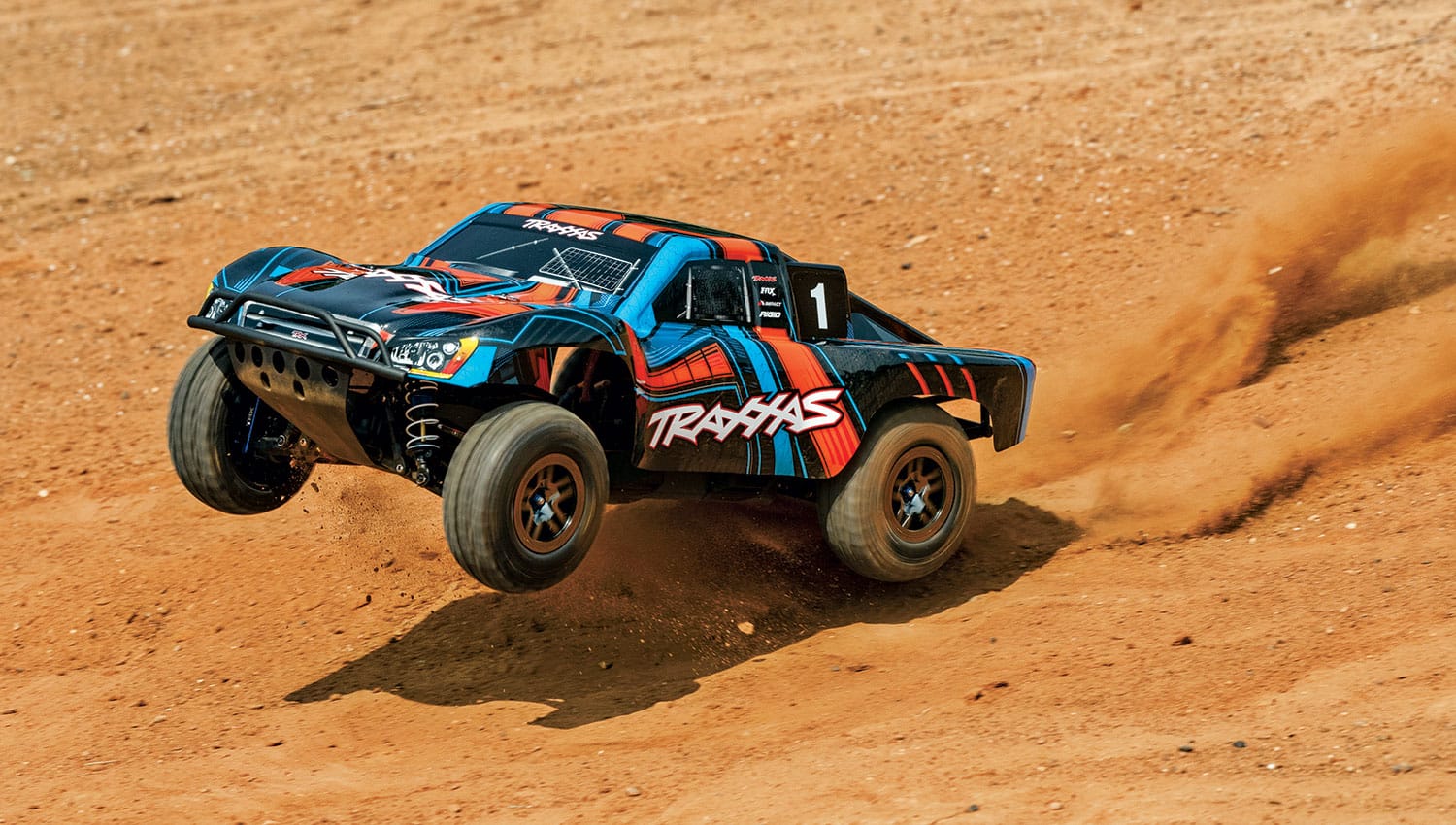
Photo by TRAXXAS
Brand overview
There are numerous manufacturers and brands in the field of remote-controlled cars. Some specialize in entry-level models, while others cater to the high-end segment. We provide an overview of the best-known brands and their typical offerings.
Jamara
Jamara is a German brand that specializes primarily in children's and entry-level models. The vehicles are robust, priced in the medium to affordable segment and are suitable for children from the age of five. Typical features include simple remote controls, splash protection on some models and interchangeable bodies. Jamara also offers spare parts in Germany, which has a positive effect on service.
Revell
Revell is primarily known for its model kits, but also has an RC line on offer. The models are often designed as kits so that children and young people can assemble them themselves. The vehicles are rich in detail and ideal for those looking for both building and driving fun. Revell models are usually in the medium to higher price range. With brushless motors and LiPo batteries, the performance increases, which will delight older children and teenagers.
Traxxas
Traxxas is an American brand known for its high-end models. The vehicles are often brushless, waterproof and can reach speeds of over 50 kilometers per hour. Traxxas models are more suitable for teenagers and hobby pilots who already have experience in the RC sector. Spare parts are available internationally, but shipping costs may apply. If you have a high budget and are looking for a really powerful vehicle, Traxxas is the right choice.
Nikko
Nikko is another inexpensive brand that often produces entry-level models for children. These vehicles are usually very robust, have simple functions and a manageable speed of five to ten kilometers per hour. Nikko cars are easy to handle, are suitable for children aged five and over and are available in many toy stores. Spare parts are sometimes limited, but standard glue or improvised parts are often sufficient for simple repairs.
Maisto
Maisto attaches great importance to realistic bodies and design. The RC cars are often modeled on real vehicle models with great attention to detail. They are in the middle price segment and are interesting for both children and teenagers. However, they are not always designed for maximum performance, but their realistic design makes them particularly appealing. Running times are on average 10 to 15 minutes, depending on the model and battery type.
Carrera RC
Carrera is known for its racetrack sets, but also has its own RC line. These vehicles are designed for beginners and advanced players and offer good value for money. Carrera RC models generally have robust plastic bodies, easy-to-operate remote controls and ranges of around 30 to 50 meters. One factor that goes down well with many parents is the German customer service and the availability of spare parts from specialist dealers.
Best remote-controlled car for children: recommendations according to age and budget
It is difficult to name a single 'best' remote-controlled car because every child has different preferences. Instead, we present good models in different age and price categories. This makes it easier for parents to decide which vehicle is right for their child.
Note: The prices listed are not binding and may change at any time.
Models for toddlers (3 to 5 years)
| Model | Price (approx.) | Features | store |
|---|---|---|---|
| Toy Tractor (Remote Control Johnny Tractor) John Deere |
25 € | Slow speed (approx. 2 km/h), easy-to-use remote control, robust housing, battery-operated (AA) | Amazon.com* |
| GVY94 Fisher-Price |
30 € | Large buttons, slow speed (approx. 2-3 km/h), light and sound effects, robust plastic housing, battery-operated (AA) | Amazon.com* |
| Marshall (fire engine) Paw Patrol |
28 € | Simple steering system, battery-operated (AA), approx. 5 m range of the remote control, child-friendly shape, impact-resistant | Amazon.com* |
| Billy Bigwheels Chicco |
27 € | Very large wheels, slow speed (approx. 2 km/h), simple button control, battery-operated (AA), child-friendly design | Amazon.com* |
Models for primary school children (6 to 8 years)
| Model | Price (approx.) | Features | store |
|---|---|---|---|
| Atom 1/18 4WD Electric Truck Maverick |
70 € | Full all-wheel drive (4WD), solid shock absorbers, speed approx. 15 km/h, rechargeable Li-Ion battery, range approx. 30 m, robust chassis | Amazon.com* |
| Ghost Racing RC Buggy Amewi |
58 € | Buggy style, solid workmanship, sprung front axle, NiMH battery (USB rechargeable), speed approx. 10 km/h, easy to control handling | Amazon.com* |
| Megalodon Storm Monster Jam |
40 € | Monster truck design, USB charging (no battery change), all-wheel drive, speed approx. 8 km/h, approx. 30 m range, child-friendly handling | Amazon.com* |
Models for older children and teenagers (9 to 15 years)
| Model | Price (approx.) | Features | Store the |
|---|---|---|---|
| Slash 4×2 (2WD) Brushless RTR Traxxas |
200 € | Brushless motor (high performance), NiMH/LiPo battery (USB upgradeable/downgradeable), speed up to 50 km/h (throttle adjustable), robust chassis, large selection of spare parts | Amazon.com* |
| Mini-T 2.0 1/18 2WD Mini-Stadium Truck Brushless RTR Losi |
180 € | Small 1/18 format, brushless motor, LiPo battery, speed approx. 35 km/h, 2WD, impact-resistant plastic chassis, USB charging, ideal for beginners to the hobby | Amazon.com* |
| 110 XS Stadium Fighter 100 % RTR Carson |
220 € | All-wheel drive (4WD), brushless motor, LiPo battery, speed approx. 45 km/h, robust chassis, extensive range of spare parts | Amazon.com* |
Legal matters and security
Before children whizz around outside with their remote-controlled car, parents should consider a few legal and safety aspects. In Germany, there are no specific laws regulating the speed of toy cars. Nevertheless, there are general rules that should be observed in order to avoid accidents and legal problems.
Speed and age recommendation
Models with a speed of up to five kilometers per hour are ideal for very young children. They are slow enough so that the child can still grip the car manually if it gets out of control. From around the age of eight, cars can be driven at speeds of up to 20 kilometers per hour or more, provided the child can handle them safely. Parents should make sure that the model has age-appropriate labeling. Manufacturers usually give an age recommendation based on the child's abilities and safety. If no recommendation is given, you should rely on your own assessment: a child who already rides a bike can usually handle a faster RC car than a child who finds riding a bike difficult.
Radio frequencies and freedom from interference
Modern remote-controlled cars generally use the 2.4 gigahertz frequency band for remote control. This has the advantage that several vehicles in the vicinity can be operated simultaneously without interfering with each other. Older entry-level models operate at 27 or 49 megahertz, which can cause interference if there are several vehicles within range. Parents should make sure that the remote control has a good range - between ten and one hundred meters, depending on the model. In residential areas with many electronic devices, interference can occasionally occur. We therefore recommend devices with frequency hopping or digital spread spectrum technology, which reduce interference noise.
Environmental and electronic waste regulations
Electronic devices, batteries and rechargeable batteries do not belong in household waste in Germany. Instead, they must be properly recycled. Parents should therefore dispose of empty rechargeable batteries or batteries in appropriate collection containers in shops or at recycling centers. Many electronics stores offer their own collection points. Care should be taken with LiPo batteries as they can catch fire if stored incorrectly or damaged. Batteries should always be stored fully discharged in a fire protection container or special battery safe. As soon as a battery is damaged or severely aged, it should be disposed of properly to avoid environmental damage.
Safety instructions for parents
- Small parts that can be swallowed: With small children, make sure that no small screws, nuts or removable decorative parts are within reach. Children under the age of three should not have vehicles with lots of small parts.
- Safety goggles and gloves: When older children open, screw or solder the vehicle, they should wear safety goggles and, if necessary, gloves. Metal shavings or sparks can cause eye injuries.
- Place of use: RC cars should never be driven on public roads. Use parking lots without traffic, sidewalks or private areas. Special RC facilities or large open meadows are best.
- Avoid remote control in crowds: If a child drives their RC car in an area with lots of passers-by, collisions can easily occur. This can result in injury or damage.
- Supervision: Younger children (up to around eight years old) should not drive remote-controlled cars without supervision. From a certain age, children become more responsible, but an adult should always be nearby to intervene in an emergency.
- Electrical safety: Before each use, parents should check that cables are intact and batteries are not inflated. Damaged charging cables or connections can cause a short circuit.
Rechargeable battery versus battery operation
A key point when buying a remote-controlled car is the question of the drive system. Should it be a model that is powered by standard batteries (AA/AAA) or is it worth investing in a rechargeable battery?
Battery operation (AA/AAA)
Advantages
- Low purchase costs, as the car itself is usually cheaper and does not require battery technology.
- Batteries are readily available and can be found in any supermarket or drugstore.
- No charging time is necessary. Simply replace empty batteries and drive on.
- Children quickly understand how batteries work and thus train their technical understanding.
Disadvantages
- Ongoing costs: Constantly buying new batteries leads to follow-up costs that add up over time.
- Performance fluctuates: When batteries are almost empty, the car drives more slowly, which can lead to frustration.
- Environmental aspect: Disposable batteries produce more waste and have to be disposed of separately, which is an additional expense.
Rechargeable batteries (NiMH, Li-Ion, LiPo)
Advantages
- Longer riding time per charge, often between 15 and 30 minutes, depending on the model and battery size.
- Constant performance: The speed remains consistently high until the battery is discharged.
- More environmentally friendly: fewer disposable batteries are produced in the long term.
- Higher performance: Batteries enable more powerful motors and therefore higher speeds, especially with brushless systems.
Disadvantages
- Higher initial purchase costs: A battery pack and charger cost more than simple models.
- Charging time: Depending on the battery, it takes 45 to 120 minutes for the battery to be fully charged again. Children need to learn patience.
- Care required: Care must be taken with LiPo batteries. These batteries must not be deep discharged and require a special charger. Improper handling can cause a fire hazard.
- Limited service life: Batteries age over time and lose capacity. Replacement is unavoidable when performance decreases noticeably.
Care, maintenance and accessories
A remote-controlled car requires regular care and occasional maintenance to ensure that it gives pleasure for a long time. There are also useful accessories that make the experience even better.
Cleaning and care
- Regular cleaning: Sand, grass and mud should be removed after every drive outdoors. A soft toothbrush can be used to brush dirt out of gears and axles.
- Compressed air spray: For hard-to-reach areas, we recommend a quick blast with compressed air spray. Make sure that no liquid gets inside.
- Wipe down the bodywork: A thin layer of dust or light dirt can simply be wiped off with a damp cloth. For heavier soiling, a mild detergent in water can help.
- Maintenance of gear wheels and chains: If chains or gears are present, they should be rubbed with a little light grease from time to time. This prevents wear and ensures quieter riding.
- Checking the bolts: Before every ride, it is advisable to briefly check all visible bolts and nuts for tightness. Vibrations can loosen bolts over time.
Spare parts and tuning
- Replace wearing parts: Tires, shock absorbers and gears are among the components that wear out quickly, especially off-road. Depending on the brand, spare parts are often available online or from specialist dealers.
- Engine and gearbox upgrades: Advanced model-building parents and teenagers can replace engines, pinions and gears to make the vehicle more robust or faster.
- Interchangeable bodies: Many mid- and high-priced models offer the option of easily changing bodies. This allows you to redesign the look of the vehicle again and again.
- Adjusting suspension struts and dampers: Spring dampers can be adjusted on off-road models or those that corner quickly. Firmer or softer suspension can increase the driving pleasure, depending on the surface.
Useful accessories
- Spare axles and wheels: You should have a few spare parts in stock so that the car does not come to a standstill immediately after an accident.
- Tool set for RC models: A small screwdriver with various bits, needle-nose pliers and side cutters should be in every RC toolbox.
- Charger with several connections: A charger with a balancer option is useful for LiPo batteries. Some chargers allow several battery packs to be charged at the same time.
- Additional battery pack: To ensure that the riding time is not interrupted by the charging cycle, at least one additional battery pack is recommended.
- Transport and carrying bag: A bag with compartments for the remote control, batteries and tools makes transportation easier and protects the model from scratches.
- Safety goggles and gloves: Safety goggles are particularly useful when tuning and opening the vehicle. Gloves protect against sharp metal edges or when lubricating gearboxes.
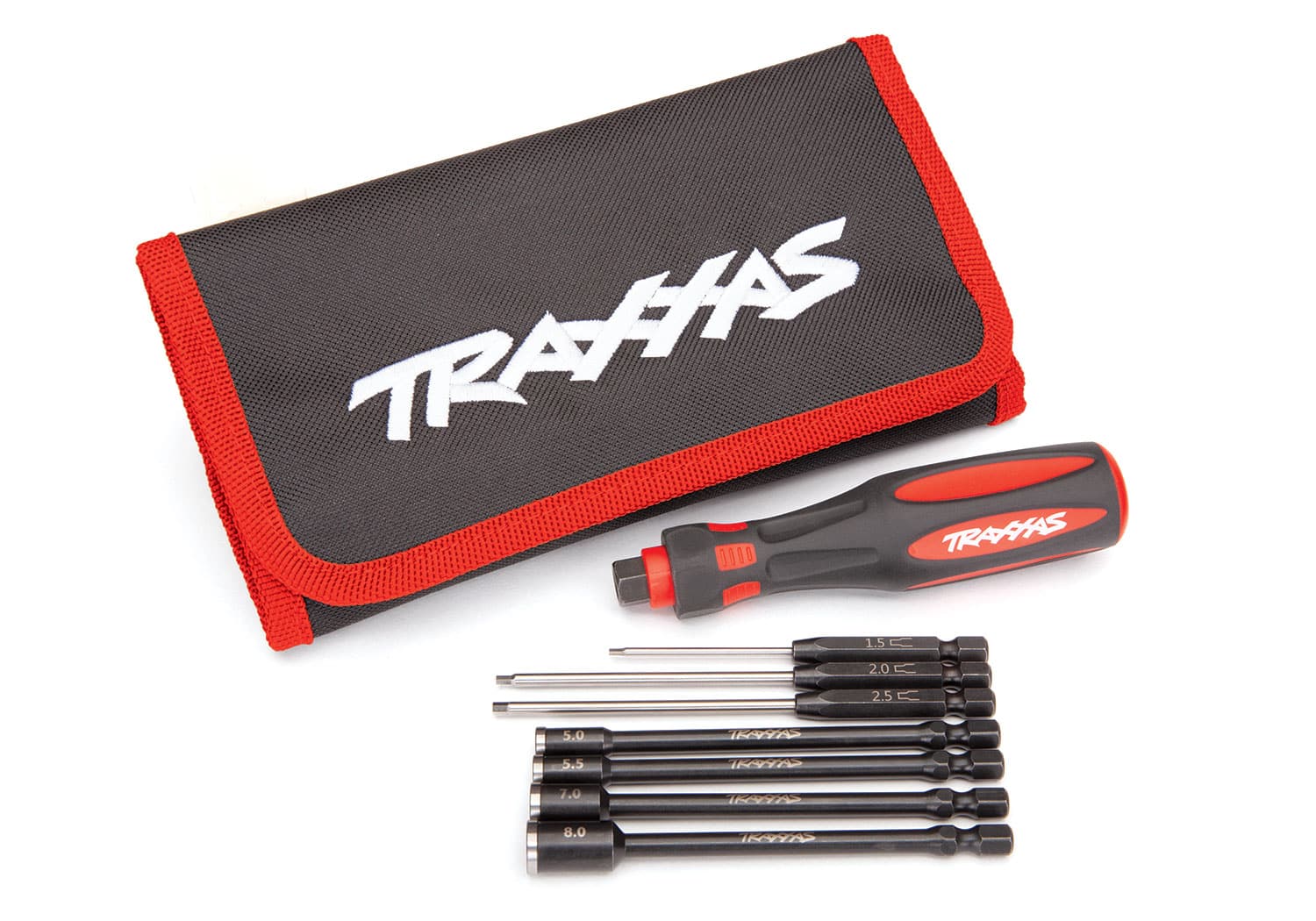
Photo from TRAXXAS
Frequently asked questions (FAQ)
- Can my child ride alone?
Younger children up to around eight years of age should not ride without supervision. From a certain age (from around ten years), children can usually ride independently, provided they have mastered the technology safely. - How long does a battery last?
A NiMH or Li-Ion battery usually lasts between ten and 30 minutes. The exact running time depends on the model, riding style and outside temperature. With powerful brushless models, the battery life may be slightly shorter, but the performance is higher. - How long does it take to charge?
A standard charger requires around 60 to 90 minutes for a NiMH battery. LiPo batteries usually require 60 to 120 minutes charging time, depending on capacity and charger. Fast chargers shorten this time if they are included in the scope of delivery. - Can I run several cars at the same time?
Yes, with 2.4 gigahertz remote controls this is possible without any problems, as each model uses its own frequency band and there is no interference. With older 27 or 49 megahertz models, interference can occur if there is more than one vehicle in the vicinity. - Are RC cars waterproof?
Only if expressly stated in the product description. Splash-proof models can survive light rain or puddles. Completely waterproof models are usually in the high-end range and even allow driving in deep water. Make sure you follow the manufacturer's instructions for cleaning and drying. - Are spare parts easy to get?
That depends on the brand. Spare parts are usually readily available for well-known brands such as Jamara, Revell, Traxxas or Carrera RC. For less well-known, inexpensive imported models, the supply of spare parts may be limited. - Is the model also suitable for tournaments?
Tournaments and races often require special rules regarding weight, speed and dimensions. If you want to take part, you should find out about the respective clubs or organizers and choose a model that meets the requirements.
Conclusion
Remote-controlled cars are much more than just toys. They promote motor and cognitive skills, awaken an interest in technology and strengthen social skills. Simple push toys or very slow RC models are suitable for small children, while primary school children can play with rechargeable batteries and sturdy housings. Older children and teenagers come into contact with brushless motors and LiPo batteries and learn to maintain and tune their vehicle independently.
When buying, parents should consider the recommended age, place of use, budget and follow-up costs. Battery-powered models are inexpensive, but have higher follow-up costs due to disposable batteries, while rechargeable batteries offer longer running times and are more environmentally friendly, but require charging time and maintenance. Different brands have different focuses: Jamara and Nikko are more suitable for beginners, while Traxxas and Revell cater to the high-end segment.
Finding the right models is a question of individual preference and budget. Regardless of the choice, regular cleaning, maintenance and spare parts procurement are important in order to enjoy the vehicle for a long time. The tips presented here will help parents decide which remote-controlled car is best suited to their child. We hope you have lots of fun driving, building and tinkering.
Sources:
- Stiftung Warentest. "Remote-controlled cars for children in the test" (retrieved 2025)
- ADAC. "Safety tips for model making and RC vehicles" (retrieved 2025)
- Federal Environment Agency. "Battery disposal and recycling guidelines" (2024)
- rc-modellbau.de. "Market overview of remote-controlled cars" (2025)
- Jamara GmbH. "Product overview RC cars for children" (manufacturer website, 2025)
- Traxxas Inc. "Traxxas Rustler Jr. product data sheet" (manufacturer website, 2025)
- Carrera RC. "User manual and spare parts list" (Manufacturer's website, 2025)
- Maisto International Inc. "Maisto RC Rock Crawler - technical data" (manufacturer's website, 2024)
- Nikko Toys Ltd. "Nikko First Racer product detail page" (manufacturer's website, 2024)
- Eltern.de. "Guide: The best remote-controlled cars for children" (2025)
- rc-express.de. "Guide to buying RC cars 2025" (2025)
- Product comparisons from welt.de, vergleich.org, faz.net, eurorc.com, dadslife.de
* Links marked with an asterisk are affiliate links. We receive a commission from the online store when purchases are made via affiliate links.