
Mud kitchen FAQ: Everything you need to know about outdoor fun!
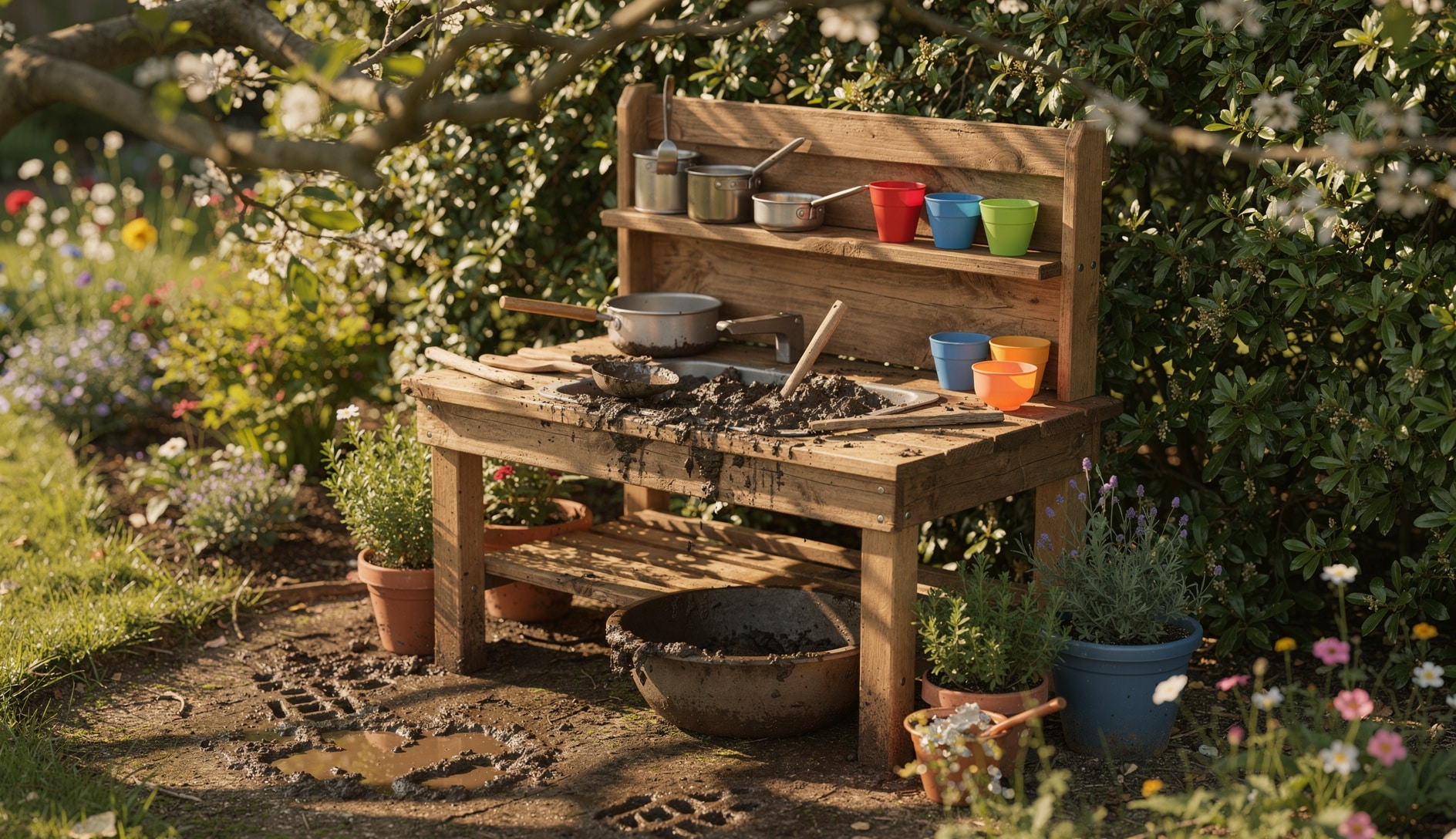
Photo: wisheezy / KI generated
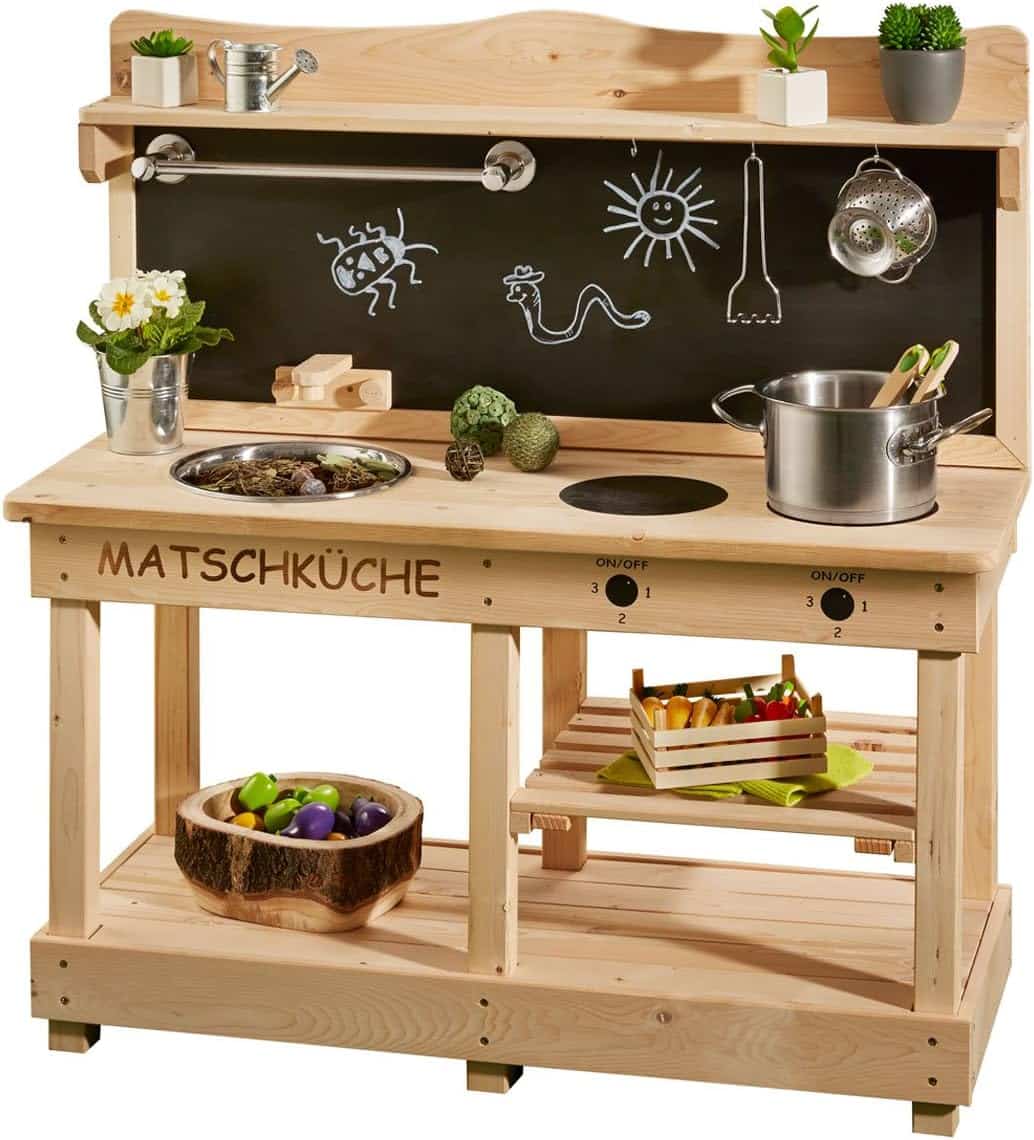
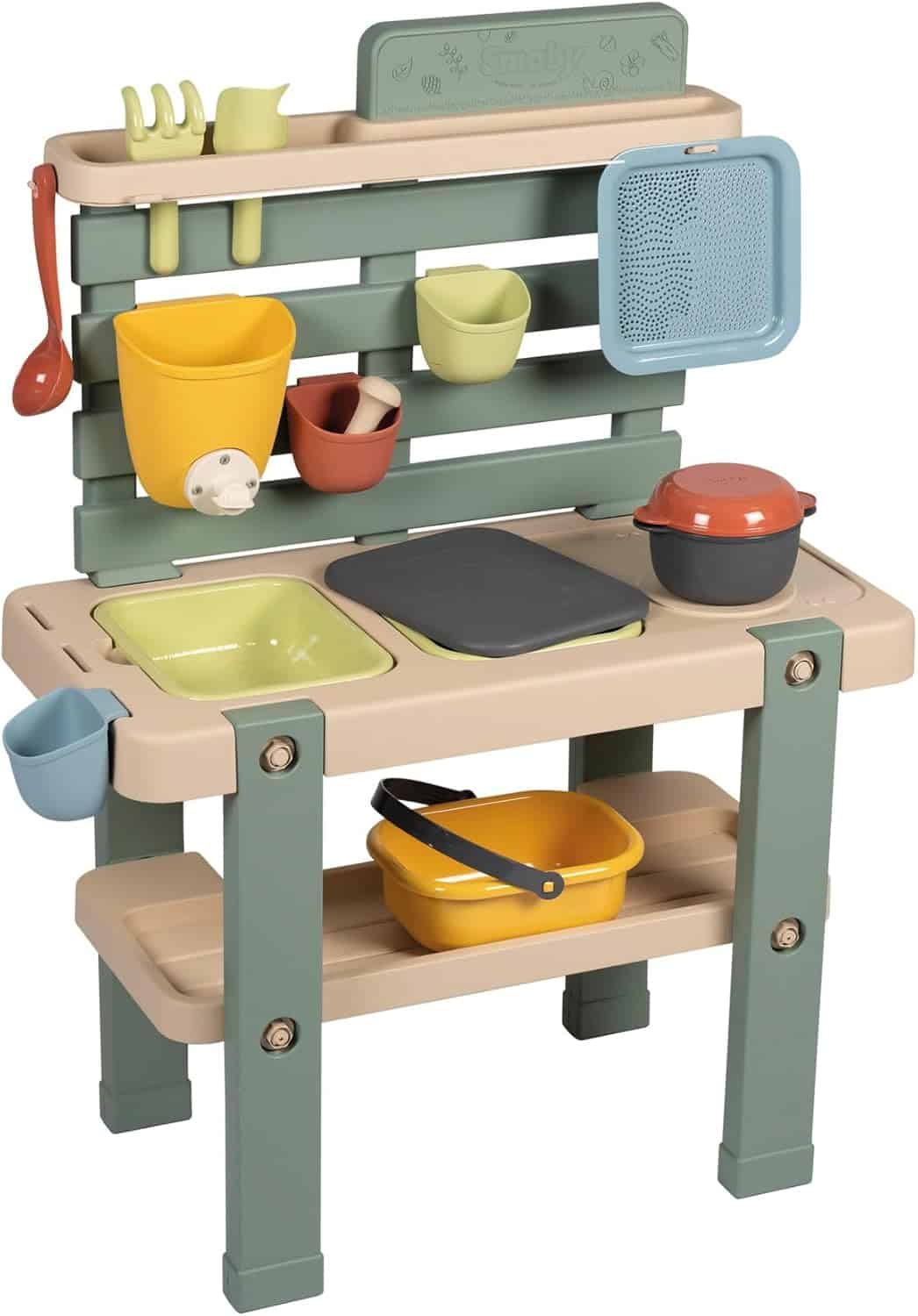
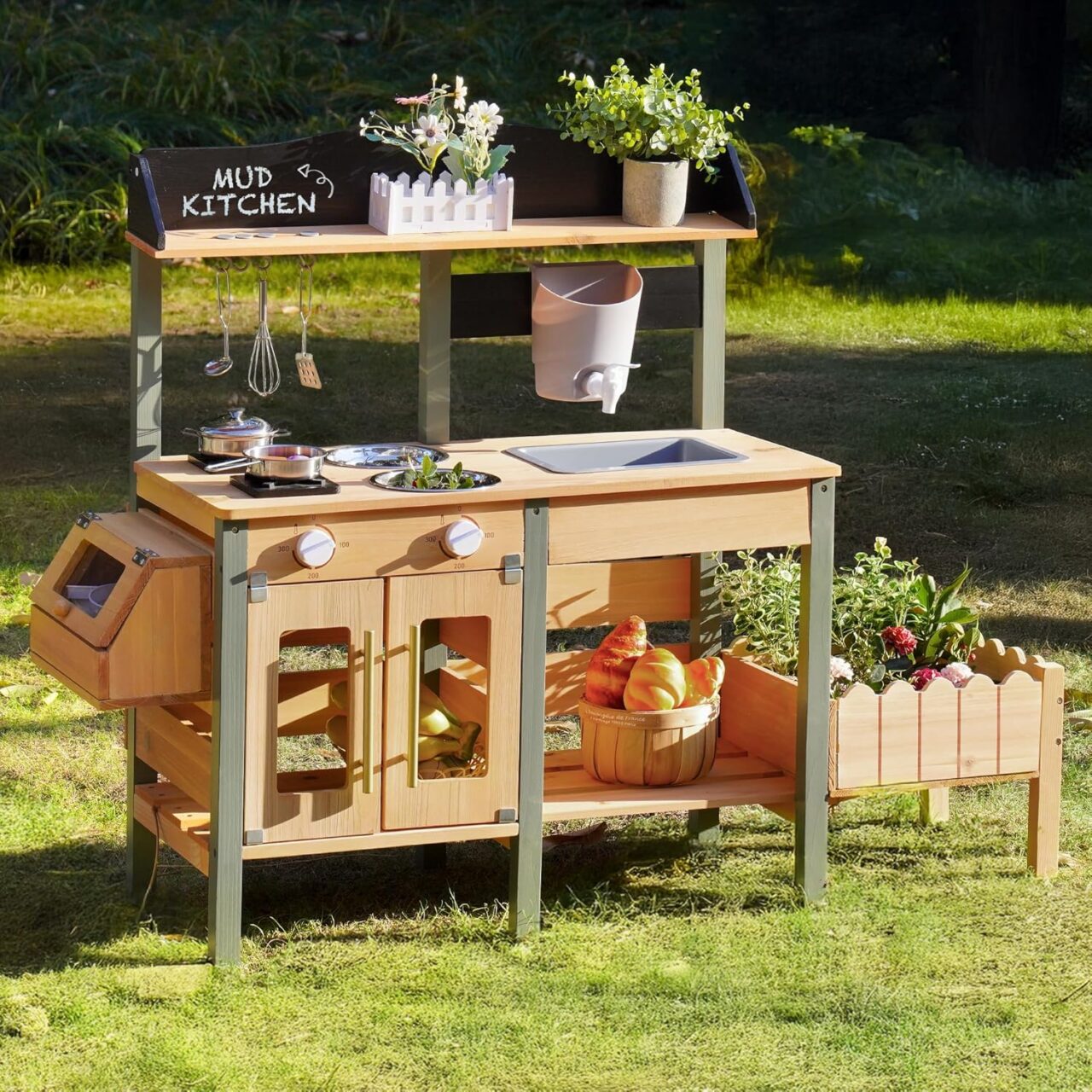
3 Product recommendations
From what age is a mud kitchen suitable?
In short: a mud kitchen makes sense from around 1.5 to 2 years of age.
Of course, a mud kitchen can be given as a present for a child's 1st birthday, but the child will not yet be playing with it. However, it can also be nice if the child slowly approaches playing with the mud kitchen as they grow.
A mud kitchen is perfect as a birthday present for 2 and 3-year-olds. And even at an older age, there is nothing to be said against it. It will then be easier to tell whether the child is more interested in this type of outdoor play.
Young children should always be supervised when playing with the mud kitchen.
How long do children play with a mud kitchen?
How long a child uses their mud kitchen is very individual and cannot be answered in general terms. However, it can be said that children play with it right up to primary school age.
What should not be missing in a mud kitchen?
The mandatory equipment
- Stable work surface (at child height, weatherproof, with drainage hole so that no water remains)
- "Sink" (stainless steel bowl, plastic bowl or old water bowl, preferably recessed or screwed down)
- Water source (canister with tap, rain barrel, watering can)
The most important play material
- Pots & pans
- Spoons, ladles
- Whisk
- Measuring jug
- Containers (cups, buckets, bowls, yoghurt pots)
- Natural materials
"Ingredients"
- sand
- water
- leaves
- stones
- cones
- Sticks
Order & storage
- ladles
- Sieves
- spoons
- Sand molds
- Mugs
Extras
- Stove tops painted on
- Recipe cards (laminated)
- Mud tray with price tags
- Brush & cloth for "washing up"
- Towel hook
- Old spice shaker for sand & water
- Tools (for "mud workshop")
What should NOT go in
- glass
- Sharp metal edges
- Fragile porcelain
- Mini parts for children under 3 years
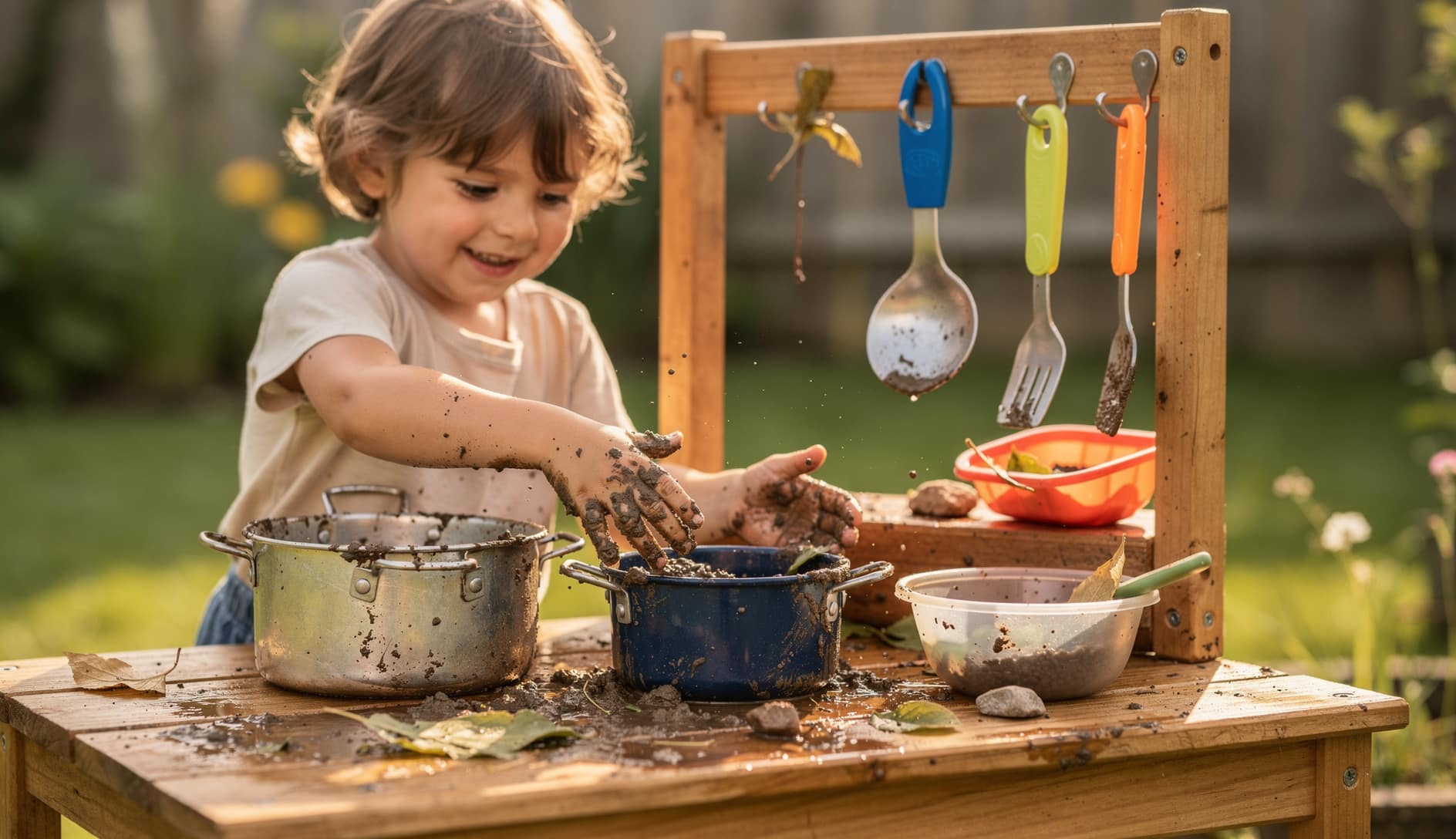
Photo: wisheezy / KI generates
Is a mud kitchen educationally valuable?
A mud kitchen is educationally very valuable because it encourages children in a holistic way. All the senses are stimulated when playing with sand, water, natural materials and simple kitchen utensils: Children feel, smell, see, hear and directly experience how materials change. At the same time, fine and gross motor skills are trained, for example when scooping, decanting, stirring or carrying.
Conversations, agreements and short stories are created through free role play, which playfully develops language, vocabulary and social skills. Children learn to share, cooperate, resolve conflicts and implement ideas together.
They also gain their first scientific experience by observing what floats, sinks, sticks or mixes.
Last but not least, the mud kitchen strengthens creativity, independence, concentration and the feeling of self-efficacy - the child immediately sees what they have created themselves. All in all, the mud kitchen is a particularly versatile and valuable play activity for early childhood development.
Build your own mud kitchen
Building a mud kitchen yourself is not difficult and doesn't even cost that much. Compared to inexpensive entry-level models, however, you have to dig a little deeper into your wallet, but in return you get a more stable and durable model.
The costs depend on whether you upcycle used materials or buy everything new. If you look around in classified ads for pallets, sand and the like, you're looking at between €20 and €50. If you buy new, you can expect to pay around €80 to €150.
Building your own kitchen gives you all the freedom you need to adapt it to your individual needs. The height of the mud kitchen can depend on the height of your child. It starts at a height of 50 cm for 2 to 4-year-olds and goes up to 75 or 80 cm for children aged 8 to 10 years. As a rule of thumb, the work surface should end at the child's navel height.
A mud kitchen is best set up on flat paving stones, gravel or chippings, bark mulch or artificial turf. It should not be placed directly on the lawn.
Building a mud kitchen from recycled pallets or drinks crates is good for the environment and your wallet. You will need around two to four pallets and four drinks crates can serve as a base.
If you buy wood, make sure it is weatherproof: larch and Douglas fir are very weatherproof and screen printing plates can be used as worktops. Spruce and fir are cheaper, but not as durable without wood protection. If you do not want to leave the wood in its natural state, it is essential to use child-safe, saliva-proof paints (DIN EN 71-3).
Play sand, quartz sand or washed building sand is suitable. Old stainless steel bowls can be used as sinks and a rainwater barrel next to the mud kitchen rounds off the outdoor play.
You can findassembly instructions for self-built outdoor kitchens at Limmaland (Ikea DiY), Sasis Garage (pallets and wooden crates) or Lisibloggt (pallets).
* Links marked with an asterisk are affiliate links. We receive a commission from the online store when purchases are made via affiliate links.